How Panama’s Month of the Bible Opened Doors to 22,000 New Believers
By Sheila-Ann Bender
In short: When missionaries requested access to 25 schools in Panama’s Ngäbe-Buglé indigenous region, the government granted permission for 100. The result? Over 50,000 indigenous people heard the gospel, and 22,705 made professions of faith in Christ—all during a single month. This school outreach program demonstrates how relationship-based missions, cultural sensitivity, and strategic partnerships can reach unreached people groups at unprecedented scale.
The Stoller Foundation’s partnership with Christianity Ministries, Inc. continues to yield remarkable fruit among indigenous communities throughout Central America. Through outreach efforts led by Panamanian missionaries Dale and LyNan Redman, tens of thousands of previously unreached individuals within Panama’s Ngäbe-Buglé comarca are encountering the life-changing Gospel of Jesus Christ.
Why Is Trust Essential for Indigenous Missions?
Missionary work within Panama’s indigenous comarcas differs greatly from ministry in cities or provinces. Access is invitation-based, relationship-driven, and governed by indigenous authority—all of which must be honored and respected. Patience and humility are essential, as trust must be earned over time.
Trust is the gateway to ministry. Without it, the truth of the Gospel cannot be effectively shared among these unreached people groups. This principle shapes every aspect of how Christianity Ministries, Inc. operates—from evangelistic crusades and showings of The Jesus Film to the powerful 100 School Outreach program.
What Is the 100 School Outreach?
In 1972, the Panamanian government began establishing schools within the comarca. By national statute, September is designated as the Month of the Bible, during which pre-approved individuals are permitted to enter select schools to present the Gospel to students. In 2025, a nationwide teachers’ strike postponed the Month of the Bible until November.
“We requested permission from MEDUCA (the Ministry of Education) to go into twenty-five schools,” explains Dale Redman. “We had previously asked for access to twenty-five public schools, but when we received MEDUCA’s written response, they surprised us by granting permission to enter one hundred schools!”
How Does the School Outreach Program Work?
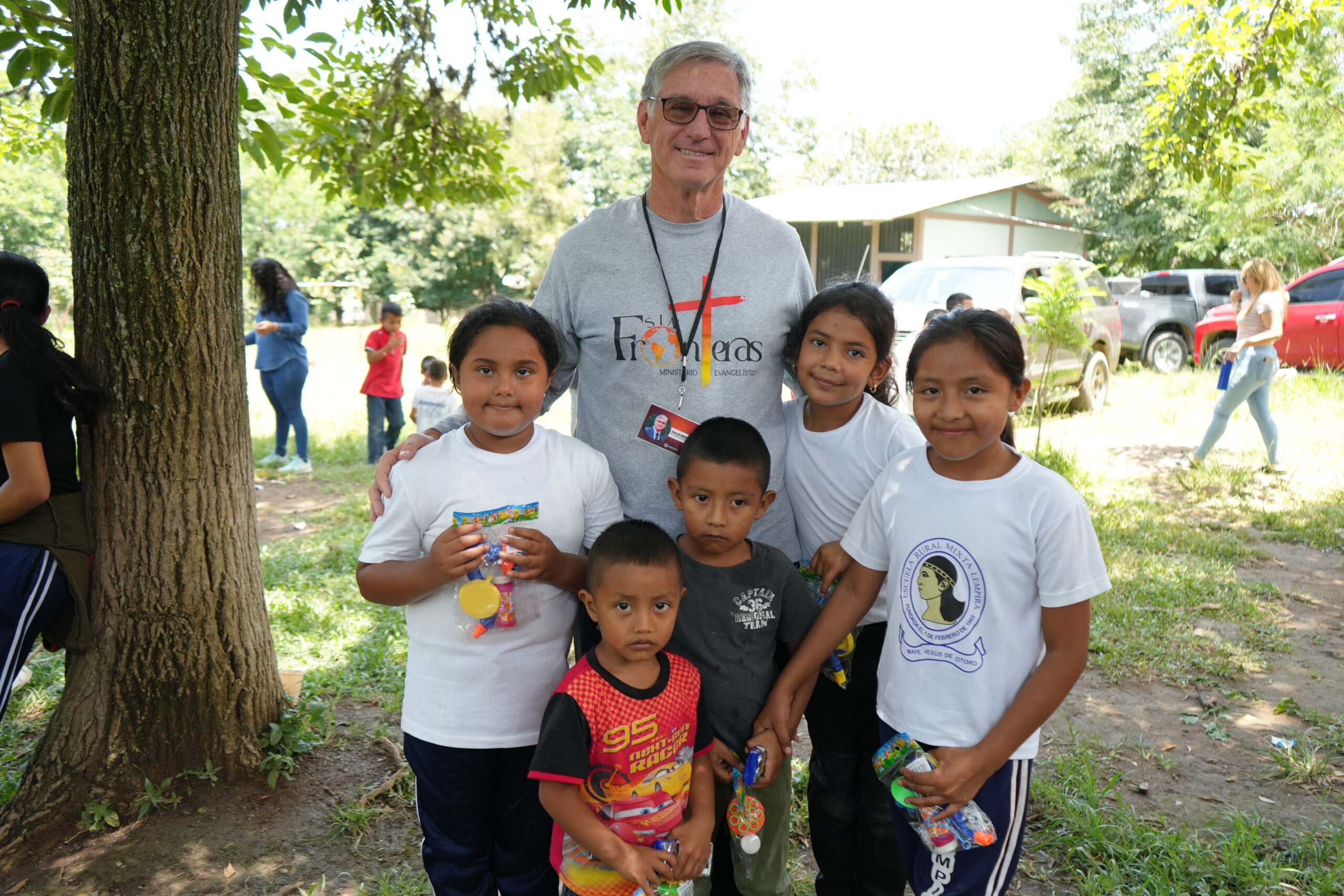
With very few exceptions, schools within the comarca educate students only through the sixth grade, meaning most children are twelve years old or younger. The outreach operates with remarkable efficiency: five teams of seven volunteers each enter five schools at a time.
Each team presents a Vacation Bible School–style program for the entire student body, including a Bible lesson, a character story, crafts, and a snack. At the conclusion of each presentation, students are invited to receive Christ as their personal Savior.
But the outreach doesn’t end when school lets out. Students are encouraged to invite family and friends to an evening showing of The Jesus Film, dubbed in their native tribal language, which is projected on the school’s soccer field for the entire village to attend. This two-phase approach—daytime school program plus evening community film—maximizes gospel exposure across generations.
What Were the Results?
During November’s 100 School Outreach alone, the numbers tell a story of extraordinary spiritual harvest:
36,250
children and teachers ministered to
18,421
students prayed to receive Christ
14,161
attended evening showings of The Jesus Film
4,284
additional believers from film showings
In total, the 100 School Outreach enabled 50,541 indigenous people to hear the Gospel message, with 22,705 making professions of faith in Christ—all within a single month.
Why Focus on Children?
“Let the little children come to Me, and do not hinder them, for the kingdom of heaven belongs to such as these.” — Matthew 19:14
In the Gospel of Luke, we read about Zacchaeus, a man who longed to see who Jesus was but could not because of the crowd. Determined not to miss the moment, he ran ahead and climbed a sycamore tree—an act that forever changed his life.
The children in these indigenous schools are much like Zacchaeus—eager, curious, and drawn toward something they do not yet fully understand but instinctively know they do not want to miss. Though many do not yet know the story of the Gospel, God is already stirring their hearts.
Children who come to faith often become bridges to their families. When a child invites parents and grandparents to an evening film showing, the gospel reaches multiple generations through a single point of contact.
Key Takeaways
Government Partnerships Can Advance the Gospel
Panama’s Month of the Bible statute creates legal pathways for gospel proclamation in public schools. Working within established governmental frameworks—rather than around them—builds credibility and expands access.
Ask for More Than You Expect
The Redmans requested 25 schools and received 100. Boldness in asking, combined with a track record of trustworthiness, can open doors far beyond initial expectations.
Multi-Phase Outreach Multiplies Impact
Combining daytime school programs with evening community events reaches both children and adults. Students become evangelists to their own families, extending the gospel’s reach exponentially.
Volunteer Teams Enable Scale
Five teams of seven volunteers, working simultaneously across five schools at a time, enabled coverage of 100 schools in a single month. Strategic deployment of trained volunteers is essential for large-scale outreach.
Frequently Asked Questions
What is Panama’s Month of the Bible?
By Panamanian national statute, September is designated as the Month of the Bible, during which pre-approved individuals and organizations are permitted to enter public schools to present biblical content to students. This legal framework provides unique access for gospel outreach that would not be possible in many other countries.
What is a comarca in Panama?
A comarca is a semi-autonomous indigenous territory in Panama with its own governance structure. The Ngäbe-Buglé comarca is the largest, home to Panama’s most populous indigenous group. Access to these regions requires building relationships with indigenous authorities and earning trust over time.
How do missionaries gain permission to enter indigenous schools?
Missionaries must request written permission from MEDUCA (Panama’s Ministry of Education) and work within the Month of the Bible framework. Years of relationship-building, consistent presence, and demonstrated respect for indigenous culture establish the trust necessary for expanded access.
Why is The Jesus Film shown in tribal languages?
Many indigenous people in the comarca speak their native language as their primary tongue, with limited Spanish proficiency. Presenting the gospel in people’s heart language dramatically increases comprehension and emotional connection. The Jesus Film has been translated into thousands of languages specifically to reach communities like these.
What happens after someone makes a profession of faith?
Christianity Ministries, Inc. works to connect new believers with local churches and discipleship resources. Evening film showings often take place on school grounds where ongoing community relationships can be maintained. The goal is not just decisions, but lasting transformation through connection to the body of Christ.
Conclusion: Helping Them See Jesus
While most of us cannot be physically present where the Redmans and their teams serve, we can still play a vital role. Through prayer, financial support, and obedient hearts open to God’s leading, we help these spiritually hungry indigenous communities “climb high enough” to see Jesus—and experience the transforming power of His love.
The 100 School Outreach demonstrates what becomes possible when faithful missionaries, supportive partnerships, and open governmental doors align. Over 22,000 new believers in a single month stand as testimony to the hunger that exists in forgotten places—and to the God who has not forgotten them.
As this partnership between the Stoller Foundation and Christianity Ministries, Inc. continues to grow, even more indigenous communities across Central America will have the opportunity to hear—and respond to—the message of God’s saving grace.
—
Want to help bring the gospel to indigenous children and families? The Stoller Foundation partners with Christianity Ministries, Inc. to expand outreach across Central America. Learn how you can support school outreach programs and help more communities encounter Jesus.
—
About the Author
Sheila-Ann Bender is a writer and ministry contributor who documents stories of faith and transformation from the mission field. She specializes in sharing testimonies of God’s work among unreached and marginalized communities worldwide.
About Christianity Ministry, Inc.
Christianity Ministry, Inc. focuses on reaching neglected indigenous groups throughout Central America through evangelistic crusades, film outreach, school programs, and discipleship. Dale and LyNan Redman lead field operations across the region, with particular focus on Panama’s Ngäbe-Buglé comarca.
About The Stoller Foundation
The Stoller Foundation partners with ministries reaching unreached people groups with the gospel of Jesus Christ. Through strategic partnerships like the one with Christianity Ministries, Inc., the Foundation supports efforts to bring the Good News to communities across Central America and beyond.